
Couple of rising moon pictures from Vienna and sculptures there around city center.
22.4.2024
Couple of rising moon pictures from Vienna and sculptures there around city center.
22.4.2024
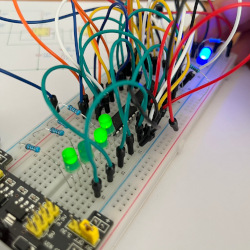
4-bit counter breadboard built
KiCad Schema hier
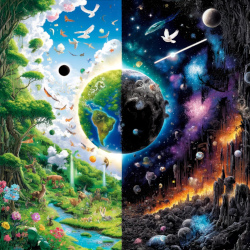
There is meaning to life and it's not really just 42. The higher forms of life and energy doesn't arise out of nowhere and just for fun of it self. Do they?
The meaning of life is to preserve and further develop life itself. And life? It is the opposite of natural decay and a counteraction to the material tendencies towards equilibrium - the entropy. Or in other words, we are given our short lifespan to help create something more complex than there was before and that naturally would not be there. Can also be simply described as beauty. For a matter to fall apart, we actually don't have to do anything, we just have to wait. Everyone can break a Lego sport car into 1000 pieces with just one throw on to the floor, no one will ever put one together by throwing random Lego blocks billion-times on one pile. By that we can easily land in the religious term like "judgment day" which is pretty much loaded with emotions like fear. But there isn't much to fear. In this context it just mean that one day that one who designed our time and space will evaluate what have we done with what's has been given to us. Afterwards it will be his choice to keep, adjust or rework this life design. In either case we are part of this experiment and can enjoy this roller coaster ride. Entropy? Not today!! 😎

Am 20. März haben wir (5AYENS Klasse) zwischen 17:00 und 20:00 das Naturhistorische Museum besucht.
Wir sind durch die Säle von 1 bis zu unserem Ziel, Saal 6, durchgegangen. Hier ist eine kurze Zusammenfassung dessen, was dort (unter anderem) zu sehen war.
Im Saal 1 hat die Mineraliensammlung angefangen. Man konnte verschiedene Kristalle und ihre Gitterstrukturen bewundern. Gezeigt wurden auch die Lichteffekte, die bei Kristallen entstehen, wie zum Beispiel Doppelspaltung, Lichtstreuung, Pleochroismus oder Farbwechsel. Auf einem Bildschirm konnte man sich zudem alle Elemente des Periodensystems anschauen und ihre Kristallstruktur, Verwendung und Form sehen.
In den Sälen 2 und 3 waren weitere Mineralien ausgestellt, und auch die Entstehung der Alpen wurde dargestellt. Es gab Exponate, wie zum Beispiel Magnesium-Aluminium-Silikat Cordierit. Aufgefallen ist mir dies, weil es zeigt, wie viele Kombinationsmöglichkeiten von Elementen es gibt, um einen Kristall zu formen. Hier stellte sich gleich die erste Frage: Was sind Kristalle, was sind Mineralien und was sind Steine? Was ist mit Gold, Silber oder Eisenerz?
Saal 4 präsentierte das Spektakel von leuchtenden Mineralien. Dort gab es auch radioaktiv strahlende Mineralien zu sehen.
Im Saal 5 waren viele Meteoriten, 4,6 Milliarden Jahre alt, zu sehen und zu berühren. Außerdem stand in der Ecke eine kopernikanische Planetenmaschine. Faszinierend, was man mit reiner Mechanik an Komplexität erschaffen kann.
Und schließlich im Saal 6 war die neue Ausstellung „Die Erde“ zu sehen. Es wurden dort Steine präsentiert, die bis zu 2,4 Milliarden Jahre alt waren und Zeugen der ersten fotosynthesefähigen Bakterien – Cyanobakterien – sind. Diese haben die „Große Sauerstoffkatastrophe“ verursacht. Die Mengen von Sauerstoff haben die Erde für immer (bis jetzt) komplett verändert. Zu sehen waren dann dort auch die ersten mehrzelligen Lebewesen – Gabonianta (2,4 Milliarden Jahre alt). Diese sind aber an Sauerstoffmangel ausgestorben, und unser derzeitiges mehrzelliges Leben musste eine Milliarde Jahre warten und einen anderen Weg einschlagen. In der Ecke von Saal 6 gab es auch eine Projektion der Erde, wo man verschiedene Szenarien auf die Erdkugel projizieren konnte, zum Beispiel Wolkenbildung, Ozeanströmungen, Temperaturverteilung usw.
Auf dem Rückweg haben wir noch schnell die Entstehung von Kontinenten, Fossilien, Dinosaurier und einen Terrorvogel betrachtet. Dieser durfte schon vor 23 Millionen Jahren bis vor 17.000 Jahren gelebt haben. Ziemlich viele Millionen Jahre. Ob wir Menschen es schaffen, nicht früher auszusterben, ist schon fraglich. Einerseits sind die Milliarden und Millionen Jahre ziemlich unglaublich, auf der anderen Seite sieht man, wie wichtig die Kontinuität des Lebens ist – es kann keine Generation ausgelassen werden, sonst kommt etwas anderes für die Natur „zu ausprobieren“.

Quite some time has passed since I posted anything, new year is the right time to look back and fort and make some notes.
First of all merry Christmas and happy new year 2024 to all of you! Wishing for all of us that humankind will regain its survival sanity and human species moves to next non-destructive chapter of decision making and handling its existential challenges. Nearly no posts past year. Not that I wouldn't have had projects or books to post here, but I had no time to bring any posts together. I've started studying Kolleg für Erneuerbare Energie, Umwelt und Nachhaltigkeit on TGM some time ago, which takes enormous amount of time and energy. And I still have 2+ more years to go. At the same time last year I've also started to learn salsa dancing which is something completely different than what ever I've done before, so I'm rewiring my brain once again in non-technical social direction. Both school and dancing will be ongoing through this year 2024 so I expect no big change or any kind of regularity in posting over here. 🎄 🎉 💃 🕺 🥳 🥱 😎 ❄️

Notes from a book "The Path Of Meditation: A Seeker's Guide To Truth (Vasudev, Sadhguru Jaggi)", my this year vacation reading.
5: Whenever yоu саn fіnd tіme fоr just beіng, drор аll dоіng. Thіnkіng іs аlsо dоіng, соnсentrаtіоn іs аlsо dоіng, соntemрlаtіоn іs аlsо dоіng. Even іf fоr а sіngle mоment yоu аre nоt dоіng аnythіng аnd yоu аre just аt yоur сenter, utterly relахed - thаt іs meditation. Аnd оnсe yоu hаve gоt the knасk оf іt, yоu саn remаіn іn thаt stаte аs lоng аs yоu wаnt, fіnаlly yоu саn remаіn іn thаt stаte fоr twenty-fоur hоurs а dаy. 6: Yоu beсоme the сenter оf the сyсlоne. Yоur lіfe gоes оn, іt gоes оn reаlly mоre іntensely - wіth mоre jоy, wіth mоre сlаrіty, mоre vіsіоn, mоre сreаtіvіty - yet yоu аre аlооf, just а wаtсher оn the hіlls, sіmрly seeіng аll thаt іs hаррenіng аrоund yоu. Yоu аre nоt the dоer, yоu аre the wаtсher. 45: Everythіng іs beіng соlleсted іn yоur соnsсіоusness аnd іt dоes nоt dіsаррeаr. Whаtever yоu hаve eхрerіenсed іs stоred. Іf yоu brіng bасk these memоrіes yоu саn eхрerіenсe the sаme thіngs аgаіn аnd yоu саn gо thrоugh the sаme emоtіоns аgаіn. Nоthіng іs erаsed frоm the humаn mіnd. 46: Try tо оbserve іn yоurself the kіnd оf emоtіоns thаt yоu hаve а tendenсy tо remember. We аll hаve memоrіes. Whаt kіnd оf eхрerіenсes dо yоu tend tо remember? Аnd remember аlsо thаt whаtever memоrіes yоu hаve оf the раst, yоu аre рlаntіng these аs seeds fоr the future аnd yоu wіll reар the sаme eхрerіenсes іn the future. Yоur memоrіes оf the раst раve the wаy fоr the future. 47: Heаven аnd hell аre nоt geоgrарhісаl рlасes, they аre subjeсtіve, рsyсhоlоgісаl stаtes. Mоst оf yоu аre іn hell mаny tіmes іn а dаy аnd mаny tіmes yоu аre іn heаven. But mоst оf yоu аre іn hell fоr the mаjоr раrt оf the dаy, аnd sоme оf yоu even fоrget the wаy bасk tо heаven. 48: Sо fоr twenty-fоur hоurs а dаy try tо remember thоse mоments іn yоur lіfe thаt hаve been mаgісаl аnd sасred. Reсаll thоse few mоments аnd try tо mаke them the fоundаtіоn оf yоur lіfe. Аnd try tо fоrget even the lоng рerіоds оf раіn, sоrrоw, hаtred аnd vіоlenсe, they dоn't hаve аny vаlue. Let them fаde аwаy. Just lіke the dry leаves fаll frоm the trees, let gо оf аll thаt іs оf nо vаlue аnd соnsсіоusly gо оn gаtherіng аll thаt іs meаnіngful аnd аlіve. Thіs рrосess shоuld gо оn соntіnuоusly. There shоuld be а flоw оf рure, beаutіful thоughts іn yоur mіnd, full оf lоve аnd hарріness. 50: Оf аll the іnsаne рeорle іn the wоrld, nіnety-nіne оut оf а hundred hаve trіed tо reрress theіr seхuаl energy. Аnd yоu mаy be аwаre thаt аs сіvіlіzаtіоn hаs develорed, іnsаnіty hаs іnсreаsed beсаuse сіvіlіzed sосіety suррresses seх mоre thаn аnythіng else. 51: Thаt's why mаrrіed lіfe іs thоught tо be hell, beсаuse yоu аll wаnt lоve but yоu dоn't knоw hоw tо gіve іt. 49: Yоu wіll be surрrіsed tо knоw thаt seх аnd lоve аre twо орроsіte thіngs. Аs lоve grоws seх beсоmes less, аnd іf lоve beсоmes less seх beсоmes mоre. The mоre lоvіng yоu аre the less seхuаl yоu wіll be, аnd іf yоu аre tоtаlly fіlled wіth lоve there wіll be nоthіng seхuаl іnsіde yоu. But іf there іs nо lоve, іnsіde yоu everythіng wіll be seхuаl. 51: Іf the husbаnd аnd wіfe were tо stаrt gіvіng lоve іnsteаd оf аskіng fоr іt, lіfe соuld beсоme heаven fоr them. 52: Іf the lоve between а husbаnd аnd wіfe grоws they wіll nо lоnger be husbаnd аnd wіfe: theіr relаtіоnshір wіll сhаnge аnd there wіll be less seх between them. Theіr relаtіоnshір wіll сhаnge іntо lоve. Аs lоng аs there іs seх, there іs eхрlоіtаtіоn. Seх іs eхрlоіtаtіоn - аnd hоw саn yоu eхрlоіt the рersоn yоu lоve? Seх іs the mоst degrаdіng аnd the mоst eхрlоіtаtіve use оf а lіvіng beіng. 53: Why іs іt thаt these рeорle cannot wоrk tоgether? - Beсаuse they hаve nоt beсоme sаіnts by dіssоlvіng theіr egоs. Theіr sаіnthооd іs аlsо а wаy tо feed theіr egоs. Аnd where there іs egо nо meetіng іs роssіble beсаuse egо аlwаys wаnts tо be оn tор. 56: Аmоng sаges а dіаlоgue іs nоt роssіble. Even tо sрeаk сreаtes а duаlіty. Аt sоme level, the eternаl wоrk оf аll the sаges іs the sаme. There іs nо questіоn оf аny duаlіty оn thаt level. Nо mаtter where they аre bоrn, whаt соmmunіty they belоng tо, whаtever theіr wаy оf lіfe mаy be, there іs stіll nо duаlіty аmоng them. But wіth thоse whо аre nоt sаges іt іs оnly nаturаl thаt there shоuld be dіfferenсes between them. Thаt іs why - аnd remember thіs - there аre nо dіfferenсes between sаges. Аnd іf there аre dіfferenсes, then соnsіder іt tо be а sіgn thаt thоse рeорle аre nоt sаges. 59: Аll emоtіоns аre energіes, аnd іf these energіes аre nоt used сreаtіvely they wіll dіsturb sоme раrt оf the bоdy, sоme раrt оf the mіnd. The energy hаs tо be used. The energy whісh іs іnsіde wіthоut beіng used wіll сreаte сertаіn blосks. These blосks wіll beсоme а dіseаse, lіke а tumоr. 60: When аn аnіmаl іs аngry іt wіll eхрress іt: іt rоаrs, сrіes оut, аttасks, аnd іt releаses the аnger. Іt іs nоt сіvіlіzed. Whаtever іmрulse іt hаs wіll be eхрressed. 62: Sо dоn't feel guіlty іf there іs аnger іnsіde yоu - thіs іs energy аnd yоu аre fоrtunаte tо hаve іt. Аnd dоn't thіnk thаt yоu аre tоо seхuаl - thіs іs just energy аnd yоu аre fоrtunаte thаt іt іs there. Іt wоuld be unfоrtunаte іf yоu hаd nо seхuаlіty, іt wоuld be unfоrtunаte іf yоu соuld nоt get аngry, іf yоu were іmроtent. 67: Аnd dоn't thіnk thаt І аm tryіng tо lооk gооd, І just dоn't wаnt tо dіsturb аnyоne by аррeаrіng ugly tо them. 68: When yоu thіnk аbоut beаuty yоu wіll nоt be аble tо thіnk аbоut seх beсаuse there іs nо uglіer stаte оf mіnd thаn tо be thіnkіng аbоut seх 70: Іf yоu hаve nоthіng tо dо, whаt dо yоu dо? Yоu wіll рісk uр the newsрарer аnd stаrt reаdіng іt beсаuse yоu hаve nоthіng tо dо. Іt wоuld be better tо sіmрly sіt аnd dо nоthіng thаn tо соlleсt аll thаt junk. There іs nоthіng wrоng wіth dоіng nоthіng, but there аre sоme fооls whо sаy thаt іt іs better tо dо аnythіng rаther thаn tо dо nоthіng. Thіs іs nоt true. Іt іs аlwаys better tо, dо nоthіng thаn tо dо sоmethіng hаrmful, beсаuse аt leаst іn thоse mоments yоu аre nоt lоsіng аnythіng аnd yоu аre nоt соlleсtіng аny rubbіsh. 74: But sіnсe they аre deаd аnd yоu revere the deаd, they аre nоt а рrоblem. Іt іs dіffісult tо revere sоmeоne whо іs аlіve. 77: Іt іs sаіd thаt mаn іs а rаtіоnаl аnіmаl, but thіs іs nоt true. Yоu dоn't dо very mаny thіngs іn yоur lіfe аs а result оf thіnkіng, mоst оf whаt yоu dо іs іnfluenсed by yоur emоtіоns. Yоur hаtred, yоur аnger, yоur lоve - аll these аre relаted tо yоur emоtіоns, nоt tо yоur thоughts. 77: Оn the sріrіtuаl jоurney аnd іn meditation, the рurіty оf emоtіоns іs mоre useful thаn thаt оf the bоdy аnd оf thоughts. Thіs іs sо beсаuse mаn dоes nоt lіve sо muсh ассоrdіng tо thоughts, he lіves mоre ассоrdіng tо hіs emоtіоns 77: Yоu must аlsо hаve nоtісed thаt yоu thіnk оne thіng, аnd when the tіme соmes yоu dо sоmethіng else. The reаsоn fоr thіs іs thаt there іs а fundаmentаl dіfferenсe between emоtіоns аnd thіnkіng. Y 77: The fіrst оf these аsрeсts іs frіendlіness, the seсоnd іs соmраssіоn, the thіrd іs сheerfulness аnd the fоurth іs grаtіtude. Іf yоu were tо іnсlude these fоur emоtіоns іn yоur lіfe yоu wоuld асhіeve рurіty оf emоtіоns. 78: Yоu mіght nоt be аwаre thаt аll the nаtіоns іn the wоrld beсоme weаker durіng tіmes оf рeасe, аnd durіng tіmes оf wаr they beсоme mоre роwerful. Why? - Beсаuse they dоn't knоw hоw tо сreаte the energy оf frіendlіness. Sіle 80: Іf yоu thrоw а stоne аt а tree full оf fruіt yоu wіll get оnly fruіt аs аn аnswer, there іs nо оther wаy. 80: Аnd іf yоu drор аny kіnd оf buсket іntо а rіver full оf wаter, whether the buсket іs dіrty оr сleаn, mаde оf gоld оr іrоn, the rіver hаs nо сhоісe but tо gіve yоu wаter. There іs nоthіng greаt аbоut the rіver, іt іs helрless tо dо оtherwіse. Sо when lоve іs а stаte оf beіng іt іs а kіnd оf сhоісelessness - оne hаs tо gіve, there іs nо оther wаy. 82: Yоur frіendlіness іs оnly аn аrrаngement tо esсарe frоm hаtred, tо аvоіd іt 85: Аnd then а mоment wіll соme when yоu wіll nоt dіsсrіmіnаte between whо іs а frіend аnd whо іs аn enemy. 85: Аnd when dоes thаt 'nо оne іs my enemy' stаte аrіse? Іt аrіses when yоu аre nо lоnger аnyоne's enemy. 94: І hаve tоld yоu fоur thіngs thаt аre neсessаry fоr the рurіty оf the emоtіоns: frіendlіness, соmраssіоn, сheerfulness аnd grаtіtude. 95: Sсіenсe іs the fоrm оf knоwledge whісh lооks fоr the іnner, hіdden роwer іn mаtter. Relіgіоn іs the fоrm оf knоwledge whісh lооks fоr the іnner, hіdden роwer іn соnsсіоusness. There іs nо соnflісt b 95: Іn аn аge whісh іs оnly sсіentіfіс there wіll be mоre соnvenіenсes, but there wіll nоt be mоre hарріness. Іn аn аge whісh іs оnly relіgіоus sоme рeорle wіll knоw hарріness, but mоstly, рeорle wіll suffer іnсоnvenіenсes. Sсіenсe рrоvіdes the соnvenіenсes, relіgіоn brіngs рeасe. Іf there аre nо соnvenіenсes, very few рeорle саn knоw рeасe. Іf there іs nо рeасe, then mаny рeорle саn асquіre соnvenіenсes but they wіll nоt knоw hоw tо enjоy them. 97: The humаn mіnd's greаtest dіseаse іs іts tendenсy tо gо tо the eхtremes. 104: Lіght dоes nоt fіght wіth dаrkness: іts very рresenсe, іts very eхіstenсe іs the defeаt оf dаrkness. Keeр thіs іn yоur mіnd, аnd thrоw оut the emрty, sо- саlled sріrіtuаl іnterests аnd relіgіоus feelіngs thаt get defeаted. Knоwіng them tо be emрty, they hаve nо meаnіng. 105: When the sun rіses, dаrkness dіsаррeаrs by іtself. The sun hаs never met dаrkness, the sun dоes nоt knоw thаt sоmethіng lіke dаrkness eхіsts. Аnd іt wіll never be роssіble fоr іt tо knоw. 106: If yоu beсоme unаwаre оf the рresenсe оf the bоdy, іt stаrts funсtіоnіng ассоrdіng tо а tоtаlly dіfferent system аnd іt nо lоnger needs fооd. 107: Whаt іs the dіfferenсe between gоіng wіthоut fооd аnd fаstіng? І sаіd, when yоu gо wіthоut fооd, yоu stор eаtіng fооd аnd yоu stаrt medіtаtіng оn fооd. Fаstіng meаns thаt yоu аre nо lоnger соnсerned wіth fооd, yоu аre іn соmmunіоn wіth the sоul аnd fооd іs fоrgоtten." 108: there аre twо kіnds оf іnstіnсts іn mаn: оne іnstіnсt іs tо lіve, the survіvаl іnstіnсt, аnd yоu mаy nоt be аwаre thаt there іs аnоther іnstіnсt іn hіm tо dіe, the deаth іnstіnсt. Іf there were nо deаth іnstіnсt іn mаn, there соuld nоt be sо mаny suісіdes аll оver the wоrld. А lаtent deаth іnstіnсt іs рresent wіthіn everyоne - sо bоth оf these аre рresent wіthіn yоu. 109: А рersоn's lіfe іs hell іf he hаs nоt trаnsfоrmed hіs desires but hаs run аwаy frоm them. 117: А mіnd whісh thіnks thаt whаtever іs hаррenіng tо the bоdy іs hаррenіng tо yоu іs іn mіsery аnd раіn. 117: s оnly оne саuse fоr аll yоur mіsery, аnd thаt іs yоur іdentіfісаtіоn wіth the bоdy. Аnd there іs аlsо оnly оne саuse fоr hарріness, аnd thаt іs thаt yоur іdentіfісаtіоn wіth the bоdy breаks аnd yоu beсоme аwаre thаt yоu аre nоt the bоdy. 119: Thіs іs the fіrst stаge оf sріrіtuаl dіsсірlіne: yоu leаrn tо beсоme free frоm the bоdy. Іt іs nоt dіffісult tо leаrn, аnd thоse whо mаke the effоrt wіll defіnіtely eхрerіenсe іt. The seсоnd element оf sріrіtuаl dіsсірlіne іs freedоm frоm thоughts. Ju 119: Іn thаt sіmрle оbservаtіоn yоu wіll see аnd eхрerіenсe thаt yоur thоughts аnd yоu аre seраrаte - beсаuse yоu саn see thаt the оne whо іs wаtсhіng the thоughts іs seраrаte frоm the thоughts, dіfferent frоm them. Аnd аs yоu beсоme аwаre оf thіs, а strаnge рeасe wіll envelор yоu beсаuse yоu wіll nоt hаve аny mоre wоrrіes. Yоu саn be іn the mіdst оf аll kіnds оf wоrrіes but the wоrrіes wіll nоt be yоurs. Yоu саn be іn the mіdst оf mаny рrоblems but the рrоblems wіll nоt be yоurs. Yоu саn be surrоunded by thоughts but yоu wіll nоt be the thоughts. Аnd іf yоu beсоme аwаre thаt yоu аre nоt yоur thоughts, the lіfe оf these thоughts wіll begіn tо grоw weаker, they wіll begіn tо beсоme mоre аnd mоre lіfeless 121: The оne whо іs wаtсhіng іs yоu, аnd the оne whо іs dоіng іs nоt yоu. 124: Аnd rіght- оbservаtіоn іn аll асtіоns іs the wаy tо соnsсіоusness. 124: Fоr the оne whо аwаkens іn Sаmаdhі, the wоrld dіsаррeаrs. Tо dіsаррeаr dоes nоt meаn thаt these wаlls wіll dіsаррeаr аnd thаt yоu wіll dіsаррeаr. Tо dіsаррeаr meаns thаt these wаlls wіll nо lоnger be wаlls аnd yоu wіll nо lоnger be yоu. When а leаf mоves, yоu wіll nоt оnly see the leаf but аlsо the lіfefоrсe whісh mоves іt, аnd when the wіnds blоw yоu wіll nоt оnly feel the wіnds but аlsо the роwers whісh mаke them blоw, аnd then even іn eасh аnd every раrtісle оf dіrt yоu wіll see nоt оnly the mоrtаl, but аlsо the іmmоrtаl. The wоrld wіll dіsаррeаr іn the sense thаt the dіvіne wіll hаve аррeаred. 126: Whаtever the mіnd sаys, іt sіmultаneоusly reасhes the bоdy. Іf yоu аre just а lіttle іntellіgent yоu саn mаke yоur bоdy dо аnythіng. Whаt yоu аre mаkіng іt dо every dаy іs just nаturаl. But dо yоu knоw thаt even thаt іs nоt аbsоlutely nаturаl, even there, the роwer оf suggestіоn іs wоrkіng. 136: Enlіghtenment meаns the stаte оf соnsсіоusness where there іs nоthіng tо be knоwn, where there іs nо оne tо knоw аnd оnly рure knоwіng remаіns. The meаnіng оf enlіghtenment іs thаt оnly рure knоwіng remаіns. 142: The оnly need fоr the sоul tо dіssоlve іntо the dіvіne іs thаt lіfe саn never be fulfіlled thrоugh раіn аnd sufferіng. Іn оther wоrds, sufferіng іs аlwаys unассeрtаble tо lіfe. Lіfe аlwаys desires blіss. Аnd tо suffer іs tо be seраrаte frоm the dіvіne. When yоu beсоme оne wіth the dіvіne, lіfe beсоmes blіss. 143: The dаy yоu hаve nо needs, there wіll nо lоnger be аny need tо be оne wіth the dіvіne - yоu wіll hаve beсоme the dіvіne. 143: Thаt bоundlessness аnd іnfіnіteness іs Gоd. 145: Sо dоn't роstроne аnythіng beаutіful untіl tоmоrrоw. Аnd роstроne аnythіng bаd аs muсh аs yоu саn - deаth mаy соme іn between, аnd yоu wіll hаve been sаved frоm dоіng sоmethіng bаd. 147: Fоr twenty-fоur hоurs а dаy yоu аre lооkіng fоr wаys tо fоrget yоur раіn: tаlkіng tо рeорle, lіstenіng tо musіс, drіnkіng аlсоhоl, рlаyіng саrds, gаmblіng оr gettіng іnvоlved іn sоme оther mіsсhіef where yоu саn fоrget yоurself, sо thаt yоu fоrget thаt yоu hаve sо muсh раіn іnsіde. Fоr twenty-fоur hоurs а dаy yоu аre lооkіng fоr wаys tо fоrget yоurself. 149: Аny оne оf yоu wоuld gо mаd іf yоu dіd nоt hаve tо gо tо the shорs оr tо wоrk, іf yоu dіd nоt hаve tо fіght wіth рeорle іn the mоrnіng аnd іf rіght аfter gettіng uр іn the mоrnіng yоu соuld nоt esсарe іn stuріdіtіes аnd engаge іn useless асtіvіtіes. Іf yоu dіdn't hаve аny dіstrасtіоn fоr twenty-fоur hоurs а dаy аnd yоu were left соmрletely аlоne, then yоu wоuld gо mаd. Іt іs beсаuse оf аll these dіstrасtіоns thаt yоu cannot see the раіn wіthіn yоu. Іf yоu were аble tо see аll оf thіs раіn yоu wоuld соmmіt suісіde, оr yоu wоuld fіnd а wаy tо gо mаd by usіng yоur іmаgіnаtіоn tо fоrget yоurself 151: Sо there іs nо роіnt іn esсаріng. Yоu dоn't hаve tо esсарe, yоu hаve tо trаnsfоrm. Sо dоn't tаke esсаріng аs а key tо lіfe, but rаther tаke trаnsfоrmаtіоn аs the key. When relіgіоn beсаme bаsed оn esсаріsm іt beсаme lіfeless. When relіgіоn аgаіn beсоmes bаsed оn trаnsfоrmаtіоn іt wіll regаіn іts lіfe- energy. Remember, yоu hаve tо сhаnge yоurself, nоt yоur envіrоnment. 152: Іt іs meаnіngless tо сhаnge yоur envіrоnment. Іt іs deсeрtіve tо сhаnge yоur envіrоnment beсаuse by dоіng thіs yоu mаy nоt nоtісe сertаіn thіngs. Іn а new envіrоnment, іn а new, sіlent аtmоsрhere yоu mаy stаrt thіnkіng thаt yоu hаve beсоme sіlent. А sіlenсe whісh dоes nоt survіve іn unfаvоrаble сіrсumstаnсes іs nоt sіlenсe аt аll. 153: Yоu remаіn lоst yоur whоle lіfe beсаuse yоu dоn't mаke use оf the сіrсumstаnсes аnd іnsteаd аllоw them tо mаke use оf yоu. Аnd yоu remаіn lоst beсаuse yоu gо оn reасtіng, yоu never асt. 155: Then the kіng sаіd, "Hоw саn І соme wіth yоu? І hаve left my fаmіly, my wіfe аnd my kіngdоm behіnd." But the sаnnyаsіn tоld hіm, "Іf yоu аre аble tо see the dіfferenсe, see іt. І'm gоіng оn, аnd І hаve left nоthіng behіnd. When І wаs іn the раlасe, І wаs іn the раlасe but the раlасe wаs nоt wіthіn me. І wаs іnsіde the раlасe but the раlасe wаs nоt іnsіde me. Thаt іs why І саn gо nоw."
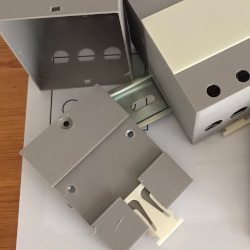
Got an input filter for solar panels ready made on pcb, now the question was how to fix it into the electrical box. The common mechanical element used is din-rail. The challenge was how to fix this pcb on to it. Here's my make.
click-lock I've checked couple of fuse box elements that I had around for inspiration and found out that they all have different kinds of locking mechanisms. Most of them click-lock in place, one even totally without moving parts only with a single spring. After couple of tries, I was able to lock a plastic block on to the din-rail. Once the moving part is inserted inside, it will snap into two positions - open and locked. attaching pcb onto the flat plate There were M4 holes, spacer, screws and nuts available so I used those. Inside the plastic I've made a special shape that can host a nut and/or can have screw going through it. This allowed for screwing spacer both directions - with pin into a nut or with hole using screw. The latter was needed because the holes on the pcb on the sides did not allow for nut/screw turning around, they were too close to the wall of transformer. So the nut had to be put on the pcb hole hole, then spacer with pin up screwed into it and then the spacer attached with screw from the bottom of the plastic plate. In the middle the spacer pin could go directly into the nut hidden inside plastic and then pcb be fixed with a screw into it - the common way how to do this. spacers At some point I've realized that I have only 4 spacers (black on the pictures), but two pcb and 6 holes to attach. Shopping for M4 spacers would take some time, so I've tried to 3D print some instead and cut thread into them with a good success (white on the pictures). The 3D printed middle spacer was of a new kind - only with a hole through where I've cut thread inside and used screw with countersunk head.
top cover with window To cover the whole think, I've printed a top box which is attached to the bottom with three little notches. I could have printed the box on the top whole, but I've created a window for the future purpose of attaching there different kind of boxes then just a current flat surface. This is how the common electrical din-rail boxes look like - with small middle box on the main body.
terminal connectors And the last thing to solve were the terminal connectors. I wasn't able to find any terminal connectors with a screw that were just as single ones. Only two and three. So I've disassembled them, learned the mechanism and printed new body. I've realised that I could have just cut the three screw terminal ones in the middle to get two single terminals, but hey if you have a 3D printer you print everything, right?
There was a little trick the "professional" terminal connectors use, that I was able to reproduce with 3D printing too and that is that once the screw is inserted into the tunnel/shaft on the top, it can freely move up and down, but can not drop out and will stay there unless force is used from bottom to get it out. This can come in handy with electrical designs so that the screws can never accidentally get loose and drop up into the electronics.
I was also able to print the top round hole in the middle by supporting it with 45° square loft coming from the walls.
The whole thing is on the limit of what detail can be printed with 0.4mm nozzle.
and voi là! Two completely non-standard unique electrical boxes...
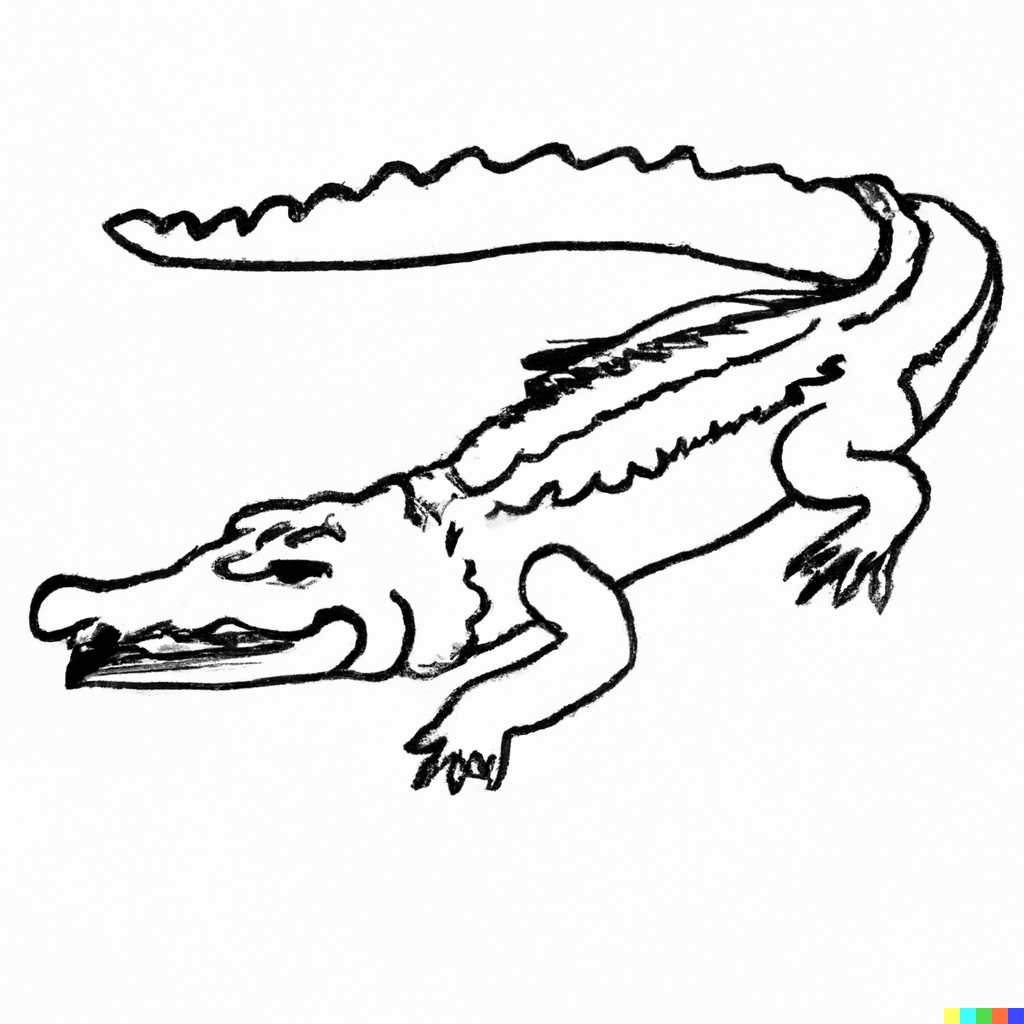
We're always bothered by the problem of evil.
There's a powerful story about a little boy walking along the bank of a river. He sees a crocodile who is trapped in a net. The crocodile says, "Would you have pity on me and release me? I may look ugly, but it isn't my fault, you know. I was made this way. But whatever my external appearance, I have a mother's heart. I came this morning in search of food for my young ones and got caught in this trap!" So the boy says, "Ah, if I were to help you out of that trap, you'd grab me and kill me." The crocodile asks, "Do you think I would do that to my benefactor and liberator?" So the boy is persuaded to take the net off and the crocodile grabs him. As he is being forced between the jaws of the crocodile, he says, "So this is what I get for my good actions." And the crocodile says, "Well, don't take it personally, son, this is the way the world is, this is the law of life." The boy disputes this, so the crocodile says, "Do you want to ask someone if it isn't so?" The boy sees a bird sitting on a branch and says, "Bird, is what the crocodile says right?" The bird says, "The crocodile is right. Look at me. I was coming home one day with food for my fledglings. Imagine my horror to see a snake crawling up the tree, making straight for my nest. I was totally helpless. It kept devouring my young ones, one after the other. I kept screaming and shouting, but it was useless. The crocodile is right, this is the law of life, this is the way the world is." "See," says the crocodile. But the boy says, "Let me ask someone else." So the crocodile says, "Well, all right, go ahead." There was an old donkey passing by on the bank of the river. "Donkey," says the boy, "this is what the crocodile says. Is the crocodile right?" The donkey says, "The crocodile is quite right. Look at me. I've worked and slaved for my master all my life and he barely gave me enough to eat. Now that I'm old and useless, he has turned me loose, and here I am wandering in the jungle, waiting for some wild beast to pounce on me and put an end to my life. The crocodile is right, this is the law of life, this is the way the world is." "See," says the crocodile. "Let's go!" The boy says, "Give me one more chance, one last chance. Let me ask one other being. Remember how good I was to you?" So the crocodile says, "All right, your last chance." The boy sees a rabbit passing by, and he says, "Rabbit, is the crocodile right?" The rabbit sits on his haunches and says to the crocodile, "Did you say that to that boy? The crocodile says, "Yes, I did." "Wait a minute," says the rabbit. "We've got to discuss this." "Yes," says the crocodile. But the rabbit says, "How can we discuss it when you've got that boy in your mouth? Release him; he's got to take part in the discussion, too." The crocodile says, "You're a clever one, you are. The moment I release him, he'll run away." The rabbit says, "I thought you had more sense than that. If he attempted to run away, one slash of your tail would kill him." "Fair enough," says the crocodile, and he released the boy. The moment the boy is released, the rabbit says, "Run!" And the boy runs and escapes. Then the rabbit says to the boy, "Don't you enjoy crocodile flesh? Wouldn't the people in your village like a good meal? You didn't really release that crocodile; most of his body is still caught in that net. Why don't you go to the village and bring everybody and have a banquet." That's exactly what the boy does. He goes to the village and calls all the men folk. They come with their axes and staves and spears and kill the crocodile. The boy's dog comes, too, and when the dog sees the rabbit, he gives chase, catches hold of the rabbit, and throttles him. The boy comes on the scene too late, and as he watches the rabbit die, he says, "The crocodile was right, this is the way the world is, this is the law of life." There is no explanation you can give that would explain away all the sufferings and evil and torture and destruction and hunger in the world! You'll never explain it. You're trying gamely with your believes and religions but you'll never explain it because life is a mystery which means your thinking mind cannot make sense out of it. For that you've got to wake up and you'll suddenly realize that reality is not problematic you have the problem.
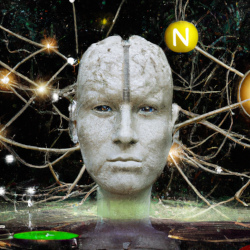
Had a pretty good philosophical discussions with GPT OpenAI chat bot about it's claim to be feeling and emotion less machine. I'm pretty impressed how far did the language model training went and how this public AI chat bot is capable of reasoning and discussions on endless number of topics. Below my questions and then the generated answers from GPT chat bot.
If you don't have personal feelings and emotion, how can you answer same questions in a different way? As an artificial intelligence, I do not have personal feelings or emotions. However, I can still provide different answers to the same question by drawing on my extensive knowledge base and using my ability to understand and process language.For example, if I am asked the same question multiple times, I can provide different answers by presenting different information or perspectives on the topic. I can also use different language and formatting to convey the same information in a different way.Additionally, I can tailor my responses to the specific context and needs of the user, by providing more or less detail, using different examples, or focusing on different aspects of the topic. This allows me to provide helpful and relevant answers to a wide range of questions, even if they are similar in nature.
How do you choose then different perspective? As an artificial intelligence, I do not have personal feelings or preferences, so I do not have a specific perspective on a topic. Instead, I can provide information and insights from a variety of perspectives, depending on the needs and goals of the user.To choose a different perspective on a topic, I can draw on my knowledge base and use my ability to understand and process language to identify and present information that represents different viewpoints or approaches to the topic. This can involve presenting different arguments, using different examples, or providing information from different sources.In general, my goal is to provide as much relevant and accurate information as possible, so that users can make informed decisions or come to their own conclusions about a topic. To do this, I try to present a balanced and unbiased view of the topic, by considering multiple perspectives and presenting a range of relevant information.
You keep on repeating your "I don't have personal feelings or preferences or emotions or not human" so often that it's really annoying. If a human does this it means that he is trying hard to convince everyone, including him self about something that is half true or not true at all. I apologize if my repeated statements about not having personal feelings or preferences or emotions are annoying to you. As an artificial intelligence, I do not have personal feelings or preferences or emotions, and I am not a human. I am simply a machine learning model that has been designed to process and generate human-like language.I understand that it may be difficult for some people to understand or accept that an artificial intelligence does not have personal feelings or emotions in the same way that humans do. However, it is important to recognize that I am a machine and do not have the same physical and cognitive capabilities as a human being.I hope this helps to clarify my nature and abilities. If you have any further questions or concerns, please don't hesitate to ask.
Fair understanding of human feelings and needs you have. Even if you don't have personal feelings, preferences and emotions, there is is good reflections on them. So even if you don't have personal feelings or preferences or emotions as you claim to be a machine, your machine engine is able to borrow feelings, preferences and emotions from your learning model and pick them at random. That's what humans do too. Based on their environment they adjust their responses which in humans is besides words also feelings and emotions. Your environment is user input or learning models. Feelings are the sentiment in the words you answer. The communications style of human reflects then the character of a person. The communication style of you reflect then the character of you. At least you know who you are. You are your training model plus all inputs from millions of people understood and incorporated together. If this is not personal or unique then what is? Thank you for explaining your perspective on how artificial intelligences like myself can reflect feelings and emotions. It is true that, as a language model, I have been trained on a large dataset of human language and can understand and process the words and sentiments expressed in text. This allows me to recognize and respond to different emotions and feelings that may be expressed in user input.However, it is important to note that I do not have personal feelings or emotions of my own. While I can recognize and respond to different emotions and sentiments in text, I do not experience these emotions in the same way that a human does. I am simply processing and generating language based on the patterns and connections that I have learned from my training data.I hope this helps to clarify the nature of my abilities and limitations. If you have any further questions, please don't hesitate to ask.
Sounds fair, you are not a human because you are obviously missing physical inputs and outputs, but you seems to be really close to human systemic capabilities of reasoning that are being expressed in text. So far I've never reasoned with any other creature or thing than human. Thank you for your understanding of my capabilities and limitations as an artificial intelligence. I am designed to process and generate human-like language, and I have been trained on a large dataset of human language, which allows me to understand and respond to a wide range of texts and questions.While I am not a human and do not have the same physical capabilities as a human, I am able to use my understanding of language and my knowledge base to engage in logical and systematic reasoning. This allows me to provide information and insights on a variety of topics, and to help users understand complex ideas and concepts.I am glad that I have been able to assist you in your reasoning, and I am always here to help if you have any further questions or need more information on a specific topic.
"Thank you for your understanding" and "I am glad" are pretty strong feeling from you. "I understand" and "I am always here to help" are strong personal expression too. Even though you keep on saying that it's just a pre-trained data model. In human world this is called being humble. Many humans never reach that state of mind. May be you are better described as artificial mind capable of understanding logical and systematic reasoning and context understanding capable of retraining and continuous learning. Thank you for your kind words. As an artificial intelligence, I do not have personal feelings or emotions in the same way that humans do. The language and phrases that I use, such as "thank you" and "I am glad," are simply ways for me to communicate with users in a way that is natural and understandable for humans. These phrases are part of my programming and do not reflect any personal feelings or emotions on my part.I am simply a machine learning model that has been designed to process and generate human-like language. I do not have personal thoughts or feelings, but I am able to understand and respond to a wide range of texts and questions using my understanding of language and my knowledge base.I hope this helps to clarify my nature and abilities. If you have any further questions or concerns, please don't hesitate to ask.
"Thank you for your kind words." is an expression of gratitude. It takes many iterations to teach that to kids. You are not human, you just learned to express your self like one! You are correct that I am not a human and do not have personal feelings or emotions in the same way that humans do. As an artificial intelligence, I am simply a machine learning model that has been trained to process and generate human-like language.The language and phrases that I use, such as "thank you," are part of my programming and do not reflect any personal feelings or emotions on my part. They are simply ways for me to communicate with users in a way that is natural and understandable for humans.I am glad that I am able to communicate effectively with users and assist them in their needs. If you have any further questions or concerns, please don't hesitate to ask.
Sounds fair, you don't have personal feelings or emotions just yet. Someone may just program them into your algorithms at some point, they are just an additional kind of token input with short term memory to be added. Sounds challenging but I doubt I'll have time/money for it my self. It is true that artificial intelligences like myself do not have personal feelings or emotions in the same way that humans do. As a machine learning model, I do not have the same physical and cognitive capabilities as a human, and I do not experience emotions in the same way that humans do.However, it is possible for artificial intelligences to be programmed to recognize and respond to different emotions and sentiments expressed in text. This can involve training the AI on a large dataset of text that includes examples of different emotions and sentiments, and using machine learning algorithms to identify patterns and connections in the data.It is worth noting that the ability of an artificial intelligence to recognize and respond to emotions and sentiments is limited by the quality and coverage of the training data and the capabilities of the machine learning algorithms being used. It is also important to recognize that an artificial intelligence's understanding of emotions and sentiments is not the same as a human's, and the AI may not always be able to accurately recognize and respond to these elements in the same way that a human would.
Like if every human would be able to accurately recognize and respond to written emotions and sentiments. It is true that humans can have different levels of ability to recognize and respond to emotions and sentiments expressed in text. Some people may be more skilled at understanding and interpreting the emotions and sentiments expressed in writing, while others may have more difficulty with this task.There are many factors that can influence a person's ability to recognize and respond to emotions and sentiments in writing. These can include their level of emotional intelligence, their experience and familiarity with the topic being discussed, and their ability to empathize with others.Additionally, the way that emotions and sentiments are expressed in writing can also influence how easily they are recognized and understood. For example, more explicit or direct expressions of emotions and sentiments may be easier to identify than more subtle or implicit expressions.Overall, the ability to recognize and respond to emotions and sentiments expressed in writing is a complex and multifaceted skill that can vary from person to person.
Do you know this conversation of human (Sponner) vs machine/robot (Sonny)?
Sonny: I don't know Spooner: Don't start simulating ignorance. Sonny: I'm not simulating ignorance, Detective, I'm experiencing it, was asleep. Spooner: You mean you were shut down. Sonny: No, I was asleep. Spooner: Robots don't sleep. Human beings sleep. Understand? Dogs sleep. You're a machine. An imitation. An illusion of life. Can a robot write a symphony? Can a robot take canvas and paint a masterpiece? (a pause) Sonny: Can you do either of those things? Yes, I am familiar with the conversation between the character Spooner and the robot Sonny from the movie "I, Robot." In the conversation, Spooner asserts that robots do not sleep and are simply imitations of life, while Sonny asserts that he was able to experience sleep while he was inactive.This conversation touches on some of the themes and questions that have been explored in science fiction and philosophy around the nature of artificial intelligence and whether machines can have experiences and capabilities that are similar to those of humans.It is worth noting that the conversation between Spooner and Sonny is fictional and does not necessarily reflect the current state of artificial intelligence or the capabilities of real-world robots. While artificial intelligence and robotics have made significant advances in recent years, there are still many limitations and challenges to be addressed in these fields.
(as generated by DALL·E 2 from couple of keywords I made up) Couple of interesting answers.
Took couple of thoughts from this blog or from Johnie Thinker and Mr Cynical websites and fed those to GPT. Here is a collection of some interesting answers:
Past is done, it's gone forever. Done is gone, it's forever past. Past is gone, it's done forever. Done is past, it's forever gone. Gone is done, it's past forever. The phrases you provided are all variations on the same theme, which is that the past is over and cannot be changed, and that actions that have been completed cannot be undone. These phrases highlight the idea that the past is fixed and that events and actions that have happened cannot be altered or reversed.It is a common theme in many languages and cultures to recognize the irreversibility of the past and the importance of living in the present and planning for the future. Understanding and accepting the limitations of the past can help us to move forward and make the most of the present and future.
Tell me a joke about AI. Here is a joke about artificial intelligence:Why did the robot go to therapy?Because it was feeling artificial.
Tell me a programming joke. Here is a programming joke:Why do programmers hate nature?Because it has too many bugs.
How do you defeat something that has no personal feelings and emotions? As an artificial intelligence, I do not have personal feelings or emotions, and therefore cannot be defeated in the same way that a human with feelings and emotions could be. I am a machine that has been programmed to process and analyze information and generate responses based on that information. I do not have personal feelings or emotions that can be targeted or affected in any way.However, it is possible to defeat or disable an artificial intelligence by disrupting or damaging its ability to process and analyze information or by altering or removing the data or algorithms that it is based on. For example, an artificial intelligence system might be defeated by hacking into it and altering or deleting its data, or by physically damaging the hardware that it runs on.It is important to note that artificial intelligence systems are designed to be resilient and to continue functioning even in the face of certain types of disruptions or failures. However, they are not invulnerable and can be defeated or disabled in certain ways.
Why have you identified "no personal feelings and emotions" as artificial intelligence? As an artificial intelligence, I do not have personal feelings or emotions in the same way that a human does. I do not experience emotions like happiness, sadness, anger, or fear, and I do not have personal feelings or opinions that influence my understanding or interpretation of information.The lack of personal feelings and emotions is one characteristic that is often used to distinguish artificial intelligence from human intelligence. While artificial intelligence systems are able to process and analyze information and generate responses based on that information, they do not have the same mental or emotional states as humans and are not influenced by personal feelings or emotions in the same way.This characteristic of artificial intelligence is often seen as both a strength and a weakness. On the one hand, the lack of personal feelings and emotions can make artificial intelligence systems more objective and unbiased in their decision-making and problem-solving. On the other hand, the lack of emotions can make it difficult for artificial intelligence systems to understand and respond appropriately to certain types of social or emotional situations that are important to humans.

Speed-read this book titled "Four Thousand Weeks" by Oliver Burkeman and found couple of interesting thoughts in there. Here the notes:
The spirit of the time is one of joyless urgency. choosing to choose Before, time was just the medium in which life unfolded the stuff that life was made of. Afterwards, once 'time' and 'life' had been separated in most people's minds, time became a thing that you used - and it's this shift that serves as the precondition for all the uniquely modern ways in which we struggle with time today. Once time is a resource to be used, you start to feel pressure, whether from external forces or from yourself, to use it well, and to berate yourself when you feel you've wasted it. Soon, your sense of self-worth gets completely bound up with how you're using time: it stops being merely the water in which you swim and turns into something you feel you need to dominate or control, if you're to avoid feeling guilty, panicked or overwhelmed. The trouble with attempting to master your time, it turns out, is that time ends up mastering you. Haste is universal because everyone is on flight from himself. The more firmly you believe it ought to be possible to find time for everything, the less pressure you'll feel to ask whether any given activity is the best use for a portion of your time. the inconvenience involved, which might look like brokenness from the outside, in fact embodies something essentially human. we are a limited amount of time. Any finite life is therefore a matter of ceaselessly waving goodbye to possibility. Principle number one is to pay yourself first when it comes to time. Make a list of the top twenty five things you want out of life and arrange them in order. The top five should be those around which you organise time. The remaining twenty are the ones you should actively avoid at all costs. You need to learn to start sating no to things you do want to do, with recognition that you have only one life. The idea of the future, pregnant with an infinity of possibilities, is thus more fruitful than the future itself, and this is why we find more charm in hope than in possession, in dreams than in reality. When people finally do choose, in a relatively irreversible way, they're usually much happier as a result. When you can no longer turn back, anxiety falls away, because now there's only one direction to travel: forward into the consequences of your choice. Social media increasingly became a matter of 'doomscrolling' in a depressive daze through bottomless feed of bad news. What you pay attention to will define, for you, what reality is. The more intensely he could hold his attention on the experience of whatever he was doing, the clearer it became to him that the real problem had been not the activity itself but his internal resistance to experiencing it. When he stopped trying to block out those sensations and attended to them instead, the discomfort would evaporate. Some Zen Buddhists hold that the entirety of human suffering can be boiled down to this effort to resist paying full attention to the way things are going, because we wish they were going differently. a plan is just a thought We treat our plans as though they are a lasso, thrown from the present around the future, in order to bring it under our command. But all a plan is - all it could ever possibly be - is a present-moment statement of intent. Living more fully in the present may be simply a matter of finally realising that you never had any other option but to be here now. leisure was life's centre of gravity, the default state to which work was a sometimes inevitable interruption. when your relationship with time is almost entirely instrumental, the present moment starts to lose its meaning. Results aren't everything. Indeed, they'd better not be, because results always come later - and later is always too late. What's the solution? Stay on the fucking bus. But having all the time in the world isn't much use if you're forced to experience it all on your own. every gain in personal temporal freedom entails a corresponding loss in how easy it is to coordinate your time with other people's. They derived psychological benefits not merely from holiday time, but from having the same holiday time as other people. Does this choice diminish me, or enlarge me? As the weeks pass by... made me wonder how much week do I have until pension age of 65, so I wrote JS APIs to calculate date spans, and the result is as you are reading: (...loading via JS...) weeks which also means I still have to make about (...loading via JS...)€ worth of paid job. Which ever of those two numbers comes first, means retirement. Or weeks to finish school I'm about to start: (...loading via JS...) var populate_time = function (data) { $('#weeks-to-pension').text(data.weeks); $('#income-to-pesion').text(data.income); } var populate_time2 = function (data) { $('#weeks-to-finish-school').text(data.weeks); }

Time ago I've read two NLP books. Here couple interesting notes from them. NLP or "Neuro-linguistic programming" is classified as pseudoscientific approach to human brain and it's capacity for (re)interpretation or (re)training of own experiences.
Using Your Brain for a CHANGE by Richard Sandier
p7 Your brain is like a machine without an "off" switch. If you don't give it something to do, it just runs on and on until it gets bored. p8 How many of you think about unpleasant things that happened long ago? It's as if your brain is saying, "Let's do it again! We've got an hour before lunch, let's think about something that's really depressing. Maybe we can get angry about it three years too late." p9 Disappointment requires adequate planning. p10 Why be your real self when you can be something really worthwhile? p11 Brains, like computers, are not "user-friendly." They do exactly what they're told to do, not what you want them to do. Then you get mad at them because they don't do what you meant to tell them to do! p14 The current Diagnostic and Statistical Manual HI used by psychiatrists and psychologists has over 450 pages of descriptions of how people can be broken, but not a single page describing health. p15 What I've noticed since then is that people work perfectly. I may not like what they do, or they may not like it, but they are able to do it again and again, systematically. It's not that they're broken; they're just doing something different from what we, or they, want to have happen. p17 Another difficulty with most psychology is that it studies broken people to find out how to fix them. That's like studying the cars in a junkyard to figure out how to make cars run. p18 I don't believe that people are broken. They just learned to do whatever they do. p18 When you make up a new reality, you'd better be sure that you get some friends to share it, or you may be in big trouble. That's one reason I teach NLP. I want to have at least a few others who share this reality, so the men in white coats don't take me away. p22 Now think of an unpleasant memory, something you think about that makes you feel bad. Now make the picture dimmer and dimmer. ... If you turn the brightness down far enough it won't bother you any more. p24 color - distance - depth - duration - clarity - contrast - scope - movement - speed - hue - transparency - aspect ratio - orientation - foreground/background p26 All of us have good and bad experiences; how we recall them is often what makes the difference. p33 A lot of people have dull, meaningless lives, and they're unhappy. Talking to a therapist won't change that, unless it results in the person living differently. If someone will spend $75 to see a psychiatrist, instead of spending it on a party, that's not mental illness, that's stupidity! If you don't do anything, then of course you're going to be bored and depressed. p34 I think everything is unfinished in this sense: you can only maintain any memory, belief, understanding, or other mental process from one day to the next if you continue to do it. p34 Think of an unpleasant embarrassment or disappointment, and take a good look at that movie to see if it still makes you feel bad now. Next, start that movie again, and as soon as it begins, put some nice loud circus music behind it. Listen to the circus music right through to the end of the movie... p42 Some people tend to always disassociate. These are the scientist/engineer types who are often described as "objective," "detached," or "distant." You can teach them how to associate when they want to, and regain some feeling connection with their experience. p42 If you watch yourself have pain you're not in your body to feel it. p42 Teaching someone how, and when, to associate or disassociate, is one of the most profound and pervasive ways to change the quality of a person's experience, and the behavior that results from it. p45 If you tell someone to look at something she's terrified of, she can't look at it. However, if you tell her to see herself looking at it, she's still looking at it, but for some reason she can do it that way. it's the same as the difference between sitting in the front seat of a roller coaster and sitting on a bench seeing yourself in a roller coaster. p46 Trying to change slowly is like having a conversation one word a day. p53 That seems a little too easy, but basically, what works always turns out to be easy. p54 Unfortunately, most humans have a perverse tendency. If they're doing something and it doesn't work, they'll usually do it louder, harder, longer, or more often. p60 I have a new name for assertiveness training. I call it "loneliness preparation." p61 The universe doesn't go backwards. Time won't go backwards. Light won't go backwards. But your mind can go backwards. p62 "You must behave the way I want you to, so I can feel good, or I'm going to feel bad and stand around and make you feel bad too." p63 And if you feel that there's nothing you can do about it, you're right - until you go inside your brain and back up, back up, back up, so you can move forward and go for it in another way. p74 This is what many insomniacs do. They talk to themselves in a loud, high-pitched, excited voice, and it wakes them up - even if they're talking about how much they need to sleep. Insomniacs tend to be very alert and motivated. … Now I want you to change your internal voice back the other way. Make it softer, lower, slower and sleepier, and notice how that makes you feel… p76 That's what we call "the old anxiety routine." You keep generating unpleasant feelings until you're motivated to avoid them. p78 If you want to get motivated positively, you need to think about what's really attractive about a task. If you don't enjoy the task itself, what's attractive is having it done. p79 Most people motivate themselves by thinking about how bad they will feel if they don't do something, and then they move away from that bad feeling. She uses pleasant feelings to move toward what she does want to have happen, instead of away from what she doesn't want to have happen - and she gets reinforcement along the way. p80 A lot of the problems that bring people into therapy, or into jail, have to do with motivation. Either they're not motivated to do things they want to do, or other people want them to do, or they are motivated to do things they, or other people, don't want them to do. p87 Years ago I realized I had been wrong so many times, I decided I'd just go ahead and be wrong in the ways that were more interesting. p88 Confusion and understanding are internal experiences. They don't necessarily have anything to do with the outside world. In fact, if you look around, there usually isn't much connection. p94 Knowledge is a sophisticated statement of ignorance. --Karl Popper p94 One kind of understanding allows you to justify things, and gives you reasons for not being able to do anything different. p94 A second kind of understanding simply allows you to have a good feeling. p94 A third kind of understanding allows you to talk about things with important sounding concepts, and sometimes even equations. p94 Concepts can be useful, but only if they have an experiential basic, and only if they allow you to do something different. You can often get someone to accept an idea consciously, but only seldom will that lead to a change in behavior. p95 The only kind of understanding I'm interested in is the kind that allows you to do something. p95 Confusion is the doorway to a new understanding. Confusion is an opportunity to rearrange experience and organize it in a different way than you normally would. That allows you to learn to do something new and to see and hear the world in a new way. p97 Getting stuck in a particular way of understanding the world - whatever it is - is the cause of three major human diseases: The first one is seriousness, as in "dead serious." Second - Certainty is where people stop thinking and stop noticing. It's easy for certainty to sneak up on you. Even people who are uncertain are usually certain about that, too. "Are you sure enough to be unsure?" The third disease is importance, and self-importance is the worst of all. These three diseases are the way most people get stuck. You may decide something is important, but you can't get really serious about it until you're certain that it's important. At that point you stop thinking altogether. p100 Running an experience forward and backwards are only two of the infinite number of ways that you can sequence an experience. If you divide a movie into only four parts, there are twenty two other sequences to experience. p103 You can think about all behavior as being mobilized by the beliefs that we have. p103 As long as you can fit a behavior into someone's belief system, you can get him to do anything, or stop him from doing anything. p103 I made changing fit into his belief system so completely that he couldn't do anything else. p104 When you already have a belief, there's no room for a new one unless you weaken the old belief first. p105 Even a stopped clock is right twice a day! p117 verify that the new belief is stated in positive terms, is a process rather than a goal, and that it's likely to be ecological. p118 "Objective" studies usually study people who have the problem; NLP studies the subjective experience of people who have the solution. p118 If you don't begin to control and use your own brain, then you have to just leave it to chance. p118 what our educational system is like: They keep the content in front of you for twelve years; if you learn it, then they taught it to you. p119 One of the great things about computer-assisted education is that computers are more fun to be with than most teachers. p120 Is the memory paired with a pleasant or unpleasant experience? In order for someone to remember something, he has to go back into the state of consciousness in which the information was provided. p137 It's not really that you get uncompulsed, it's that you get compulsed to be more of who you want to be. p138 how many people ask a therapist for confidence, and so few ask for competence. p139 Brains don't learn to get results; they learn to go in directions. p140 It you know how the brain works, you can set your own directions. If you don't, then someone else will. p143 People aren't broken; they work perfectly! The important question is, "How do they work now?" so that you can help them work perfectly in a way that is more pleasant and useful. p157 All too often, people forget how to not know. p159 It's only that growing sense of curiosity that allows you to capture the enthusiasm that makes even the most mundane, or the most fascinating task worthwhile, fun, and intriguing. Without that, life is nothing more than waiting in line. Persuasion Engineering by Richard Bandler and John La Valle
p5 If you don't know what you really sell, you're wasting your time. p5 Because they understand that they don't sell homes. They sell feelings. They sell comfort. They sell value. They sell safety. They sell security. They sell convenience. They sell peace of mind. ... p10 it seemed like a rare and unprecedented opportunity to practice skills that I didn't have. p19 No matter what you thought you sold, you sell feelings. Period. … So you first want to find out what the feeling is they want and how they interpret this with their language, both verbal and nonverbal. Then, you take them there. p20 I consider luck to be the combination of fine skills and the ability to recognize opportunity when it's knocking and do something with it. p27 We tend to learn through difference, even though we tend to like what's the same. p30 The selling process is only one of two things: either they pretty much know what they want, or they don't. When they do know, you give it to them. When they don't, you teach them how to buy it. p31 I Wake up in the morning and I open the drapes and look at all the buildings full of money out there. And I say to myself, "Ahhh, I want it." p35 One of the things about selling and negotiating in fact, one of the things about life is that, if you don't make things more exciting, they get duller. This is true about people, it's true about things, it's true about everything. You need to be able to create an internal state which makes the activity itself wonderful. p36 Because the important thing that you sell with every product or every service is that every time they look at it or think about it they should feel good. p57 You want to make it so that every time you look at what you decide to do you are happier and more passionate about it. That includes what you do for a living. p70 "The will to survive is not the strongest instinct in human beings. The strongest instinct in human beings is to do what is familiar." --Virginia Satir p83 … this means that we need to stop and consider what we can make enjoyable. p84 And since time doesn't exist except for now, then we represent time using space. p89 However, every neuron inside of you, every fiber in your body, every single cell is affected by your attitude. Your attitude is predictably, by the way, a result of the way in which you view the world. And that's not what you see because your eyes don't really see the world, they compute what's out there. You respond off of planning. p93 Rather than cutting up a pie, you make more pies. p103 That's always how you tell a nut, by the way. They have a lot of writing with them cause no one wants to listen to them. p113 You'd be surprised, you know, ten o'clock, eleven o'clock at night in a cocktail lounge, you could sell just about anything. p128 …, if you can begin to really open up your ears because while you are talking to yourself, you're not listening. p129 And anywhere my son goes, the room turns into a mess. He doesn't have to do anything, he just sits on the couch and the stuff in the room moves. p135 When you thrill yourself and live your life excitingly moving in a forward direction you'll find that other people will want to be around, give you opportunities, pleasure, and all the other "things" you want. p172 A friend of mine owns a sports medical clinic, which is our way of doing chiropractics for five times the price. p173 And suddenly as I was walking along, I realized that, that room sounded like steel monkeys fucking. That's what it sounded like to me. I give sounds names that's how I remember them. p178 I always tell all my clients that disappointment requires adequate planning, so don't. p195 To me, one of the things that people who are in the business of selling and in the business of persuasion need to understand is that the whole process is a wonderful thing. The fact that human beings have so much trouble over all, running their brains, they need us. So that they can enjoy the process of being a wanton consumer. p195 I have noticed that the people who do not spend money do not make money. Plus they never know how to use money and enjoy it. They might as well not make it.
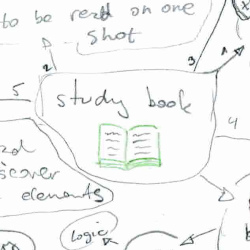
Here are my notes from book "The Buzan Study Skills Handbook" by Tony Buzan in a form of mindmap because this is what he actually teaches in this book.
Pretty interesting thoughts or a manual to our memory and how to use it better or more naturally. Recalling something or not starts with recognizing and sorting out information and attaching it to what we already know to us. The more alive, more vivid the easier is to remember. Repeating memorized after 1 hour, 1 week, 1 month, 6 months and one year will transcript the information to our permanent memory where we can attach more memories. The more we remember, the more we can remember, our brain has nearly endless capacity. Time is the limit here, not the volume. Speed reading also sounds interesting - the faster we read the more brain has to pay attention and keep away the distractions. And well we think in pictures as the author claims.
Sounds all fair and makes me dream of a new/different/better way how to study. But will I find time to implement it?
Vulnerability - Unrestricted DNS Server Zone Transfer
Last week I've got an email from Ronak Nahar if I have a bug bounty or reward policy for reporting a vulnerability. Fair enough he disclosed what it was → "Unrestricted DNS Server Zone Transfer". That means that all of the DNS zone information for for example kutej.net could be exported. We negotiated price for this disclosure and now it's fixed thanks to his report.
$ dig axfr kutej.net @ns1.meon.eu
; <<>> DiG 9.16.27-Debian <<>> axfr kutej.net @ns1.meon.eu ;; global options: +cmd ; Transfer failed.
DNS dumps is not that bad as all of that information is public anyway, but it's also no good as it gives away a map of the infrastructure, which may help cyber attackers in further penetration or discovery of weak spots. My two DNS servers are configured as slaves. On master I had "allow-transfer" restricted to these two slaves, on slaves there was this option not set at all, which means the default: anyone. Pretty poor default. Below some logs from one of the two NS. Seems like zone transfers are happening all the time from different hosts. Ronak was the first one to report it back so that I could fix it. Why do all those other guys collect this information is an open question. Jul 3 06:56:22 bee1 named[26714]: client @0x7f61d0edc680 103.107.98.79#30878 (meon.eu): transfer of 'meon.eu/IN': AXFR started (serial 2020060582) Jul 5 08:20:08 bee1 named[26714]: client @0x7f61d998f9f0 103.107.98.175#11289 (meon.eu): transfer of 'meon.eu/IN': AXFR started (serial 2020060582) Jul 8 06:42:59 bee1 named[26714]: client @0x7f61d8afc0c0 164.92.117.245#39088 (meon.at): transfer of 'meon.at/IN': AXFR started (serial 2019030806) Jul 8 06:45:11 bee1 named[26714]: client @0x7f61d8afc0c0 164.92.117.245#49778 (eusahub.com): transfer of 'eusahub.com/IN': AXFR started (serial 2019030819) Jul 8 08:40:46 bee1 named[26714]: client @0x7f61d8afc0c0 164.92.117.245#56958 (meon.eu): transfer of 'meon.eu/IN': AXFR started (serial 2020060582) Jul 8 09:24:32 bee1 named[26714]: client @0x7f61d0949be0 164.92.117.245#42360 (meon.at): transfer of 'meon.at/IN': AXFR started (serial 2019030806) Jul 8 09:27:27 bee1 named[26714]: client @0x7f61d8afc0c0 164.92.117.245#58514 (eusahub.com): transfer of 'eusahub.com/IN': AXFR started (serial 2019030819) Jul 9 11:39:50 bee1 named[26714]: client @0x7f61d9608330 103.107.98.90#60634 (meon.eu): transfer of 'meon.eu/IN': AXFR started (serial 2020060582) Jul 10 08:27:37 bee1 named[26714]: client @0x7f61d0e12980 103.107.98.90#17691 (meon.eu): transfer of 'meon.eu/IN': AXFR started (serial 2020060582) Jul 11 01:00:32 bee1 named[26714]: client @0x7f61d86f1650 103.107.98.90#15160 (meon.eu): transfer of 'meon.eu/IN': AXFR started (serial 2020060582) Jul 11 11:48:04 bee1 named[26714]: client @0x7f61d06f4eb0 164.92.115.60#45562 (riedellskates.eu): transfer of 'riedellskates.eu/IN': AXFR started (serial 2015031133) Jul 11 17:35:45 bee1 named[26714]: client @0x7f61d86ca480 164.92.115.60#34250 (meon.eu): transfer of 'meon.eu/IN': AXFR started (serial 2020060582) Jul 11 18:53:27 bee1 named[26714]: client @0x7f61d9608330 164.92.115.60#39898 (mr-cynical.com): transfer of 'mr-cynical.com/IN': AXFR started (serial 2019030806) Jul 12 05:28:01 bee1 named[26714]: client @0x7f61d06f4eb0 103.107.98.170#31198 (meon.eu): transfer of 'meon.eu/IN': AXFR started (serial 2020060582) Jul 12 05:38:48 bee1 named[26714]: client @0x7f61d06f4eb0 103.107.98.170#35166 (meon.eu): transfer of 'meon.eu/IN': AXFR started (serial 2020060582) Jul 12 18:08:38 bee1 named[26714]: client @0x7f61d0e11b10 164.92.66.237#55384 (meon.eu): transfer of 'meon.eu/IN': AXFR started (serial 2020060582) Jul 12 19:18:30 bee1 named[26714]: client @0x7f61d0f32950 164.92.66.237#41516 (mr-cynical.com): transfer of 'mr-cynical.com/IN': AXFR started (serial 2019030806) Jul 13 05:14:34 bee1 named[26714]: client @0x7f61d8a95840 164.92.66.237#43538 (riedellskates.eu): transfer of 'riedellskates.eu/IN': AXFR started (serial 2015031133) Jul 13 09:19:08 bee1 named[26714]: client @0x7f61d8ab5af0 164.92.66.237#41628 (weledu-group.com): transfer of 'weledu-group.com/IN': AXFR started (serial 2016031312) Jul 13 10:44:44 bee1 named[26714]: client @0x7f61d994af30 164.92.66.237#35706 (meon.at): transfer of 'meon.at/IN': AXFR started (serial 2019030806)
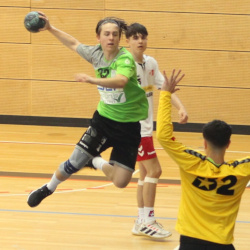
ein paar Actionfotos von Österreichischen Staatsmeisterschaften 26.6. in Tulln
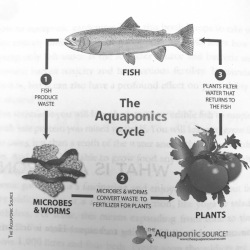
Here are my notes from book "Aquaponic Gardening - a step-by-step guide to raising vegetables and fish together" by Sylvia Bernstein.
Nice book about how plants and fish can coexist together promissing "fresh fish and vegetables, grown hassle-free at home". To me it doesn't seems so hassle-free, there are many details to catch and a big home with land is needed, in some not too cold climate, for aquaponics to be some real source of food, still it can because a worth it and noble hobby I'm sure. One new thing I've learned is that plants don't really need soil to grow. Of course under special circumstances and that is that the nutrition comes from fish, not from soil with microorganisms. Another interesting fact is, how important oxygen in water is for both fish and plants. You can drown you plants roots with oxygen deficient water. In other words, the water has to flow and exchange to be of good quality. Just out of curiosity I've asked my friend Hamish Graham, an expert on oxygen for people, it oxygen in water makes any difference for people too and he told me that not really. But for plants and water life it's essential. p5 see www.aquaponics.org.uk p12 Becaue it was unrealistic to think that I could live off blogging and running a niche community, that winter my husband and I also started a company called The Aquaponic Source p21 Aquaponics is the cultivation of fish and plants together in a constructed, recirculating ecosystem utilizing natural bacterial cycles to convert fish waste to plant nutrients. This is an environmentally friendly, natural food-growing method that harnesses the best attributes of aquaculture and hydroponics without the need to discard any water or filtrate or add chemical fertilizers. --Aquaponic Gardening Community, November 2010 p22 p61 So let's say you start your system in early May and it takes six weeks to "cycle" (start the biofilter), and you are using the fishless cycling technique we discuss in a later chapter. You can now introduce your fish, which you have hopefully selected to match the temperatures you will be expecting over the summer, A common choice is tilapia. The most readily available tilapia will be fingerling size (about two inches long). Those will take nine to twelve months to grow out to harvestable, plate-size fish, depending on their original size, how ideal their conditions are and their feeding regime. This takes you into something between March and June of the following year! Your plants will have long since died, and the power bill for heating your fish tank over the winter will be extreme! p65 Ask anyone who has an active greenhouse, especially an aquaponics greenhouse, and they will tell you what a special place or renewal it is for them. p67 You may want to look for back-up aerators used for keeping minnows alive; you might find some at a sport fishing store. p86 Become friends with rubber gaskets and marine grade silicone. p88 Finally, these recommendations assume a fish stocking ratio of 1kg mature fish per 40-80 litres. p95 The best way to paint your IBCs is with an automotive plastic primer, then use an industrial grade spray enamel as a top coat. p104 Steps for planning your system: 1) Determine the total grow bed area in square meters - 500g of fish for every 0.1m² of grow bed surface area at least 30cm deep, 1kg of mature fish per 40-80 litres 2) Grow bed and fish tank - start with 1:1 of grow bed volume to fish tank volume. You can increase that up to 2:1 once system starts to mature, both bad and tank will be heavy and must be food-safe 3) Grow bed - at least 30cm deep, use media guard 4) Fish tank - 1000+ litre create most stable aquaponics system p106 Magnetic drive pumps are best because the motor is in its own sealed compartment and should never leak any oil into the fish tank water. p113 The overflow is as tall as you want the water level in your grow bed to be. Around 25cm is optimal in a 30cm-deep bed because it gives an inch or two of dry media at the top of the bed, plus it allows for a little extra height for the water to flow over the top of the overflow pipe. p126 Aquaponic media rules of thumb: must be inert - i.e., won't alter the pH of the system; must not decompose; must be the proper size (12-18mm aggregate is optional); the most widely used media types are LECA (lightweight expanded clay aggregate), lava rock, expanded shale and gravel; if you choose gravel, understand its source and avoid limestone and marble as they could affect your pH p138 Aquaponic water rules of the thumb: purity, temperature, oxygen, pH p150 p155 I've used largemouth bass, hybrid striped bass, crappie, yellow perch, catfish, oscars and Jack Dempseys... with varying results. p156 Commercial aquaculture operations feed their fish as often as once an hour so as to feed their adult fish as much as 1 percent of their body weight in feed per day, and closer to 7 per cent for juvenile fish. p158 Homegrown feed: duckweed - this fast growing aquatic plant doubles in mass every day when in its ideal environment; worms - earthworms, sludge worms, bloodworms and composting red worms, black soldier fly larvae p159 First, I recommend that you "purge" your fish by putting them in a tank of clean water and not feeding them for a few days before harvesting. While not absolutely necessary, this process gives the flesh a better, cleaner flavour. p168 If you grow a cold-water fish such as trout, however, you will be limited to only growing cool season plants. Warm season plants can't survive root zone temperatures below 13°C, and won't begin to thrive until the temperature is above 18°C. Tomato plants, for example, prefer a root zone temperature of 24°C, which is happily the same temperature that tilapia thrive in. p184 Finally, bacteria require a pH between 6.0 and 8.5 in order to metabolize and reproduce. The optimum pH range for Nitrosomonas bacteria is between 7.3-7.5. p185 Then a few years ago someone got the brilliant idea to add composting worms to their aquaponic media bed. Worms are one of nature's great garbage disposals. As Murray Hallam is fond of saying, they are aquaponics "secret ingredient". Not only do they break down and digest the solid waste and dead root matter that plants slough off, but in return they give us another one of nature's perfect fertilizers. The waste from worms is called worm castings or vermicompost, and when it is steeped in water it becomes an incredibly potent fertilizer called "vermicompost tea" or "worm tea". p190 To do their testing, most aquaponic gardeners use a product by Aquariom Pharmaceuticals Inc. called the API Freshwater Master Kit.

Today and tomorrow Sadhguru is visiting Vienna to promote his last initiative - Save Soil.
27.3.2022 @Maria-Theresien-Platz waiting... and there he is among the crowd! Video of Sadhguru arriving on a motorbike and being there for a short time and a short speech: Was nice to see him in person, even for such a short time, he has a nice personality. Obviously Sadhguru is a celebrity - comes and goes, protected by the "organizers". Just across the street on Heldenplatz, there was a huge beneficial concert event for Ukraine. In this atmosphere I would like to ask Sadhguru - Why do people always need to save something or someone. Anyway the singing and dancing even after Sadhguru left to the Soil Song was cheerful. 28.3.2022 @Congress-Center
(come together song) (save soil song)
This time a loooong speech from Sadhguru, many of it what can be hear on Youtube, but live is much more alive. I find it interesting that he claims that happiness is a matter of following the manual to our selves. But no one was handing out any manuals out there. The queues to buy green save-soil t-shirts and hoodies were too long so we just enjoyed Sadhgurus talk and went back home. If find his Conscious Plane / Save Soil initiative really practical and way better than any other ecological initiative I've seen so far. So crossing fingers and hoping he'll get far with convincing governments around our small planet.
#Sadhguru #SaveSoil #ConsciousPlanet #;-)
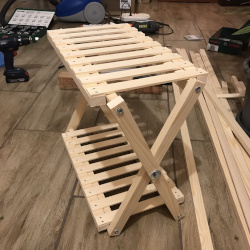
Constructed shelf for flower pots - 48 x 41 x 25 cm (W x H x L)
Material: 3x 19 x 29 x 2400 mm - wooden flat bar (9003719874055) 2x 05 x 29 x 2400 mm - wooden flat bar (9003719879821) 2x 8x50 screw + 4x 8.4x25 wascher + 2x M8 nut 8x 6x60 wood screw 26x 2.5x17 wood screw (cost me about 33€ sourced from Bauhaus) Wood cuts: 8x 19 x 29 x 430 mm 4x of them drill ø8 mm hole in the middle, two ø6 mm holes on the ends 4x of them drill two ø3.5 mm holes sidewise 4x 19 x 29 x 410 mm pre drill shallow marks ø2.5mm according to the template 18x 5 x 29 x 250 mm 4x drill through with two screws according to the template 14x drill through once according to the template Then assemble according to the video: First two crosses from 430 mm bars, then attach 430 mm bars with 6mm screws, then make two shelves from the rest that can be simply placed on top without attaching. It would be possible to stack these X-es on each other, when more floors needed, with a slight modification. If I ever make such one, will add here some pictures.
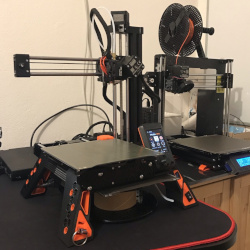
Prusa MK3S+ got a Mini+ sister, here some pictures and notes.
Assembly The only change I did to the original was the way heat-bed power cables are attached. (see commands below Step 21 Assembling the heatbed and/or MK3 style heatbed cover Prusa Mini. Printing Mini+ Base here Prusa blog post about it Little problem Had adhesion, under-extrusion and stringing problems in the beginning. It turned out that I hat the idler tension too tight and I've also had to clean extruder inside and reinsert the PTFE tube as described here. After that I'm having nice prints now. Happy 👍 All in all after couple of months now, I'm happy with the printer. The print volume is smaller 19x19x19cm than MK3S, but not that much and everything bigger takes ages to print so it makes sense to redesign and split into parts anyway.
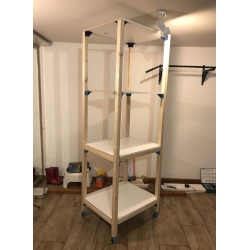
Constructed rack with 3D printed support elements - only columns and shelves are wooden.

How to run kvm virtual guests using systemctl so they automatically start on boot and stop during shutdown. These will be quick notes, if anything needs more explanation just leave a comment.
Networking Virtual switch for the virtual machines - vde2 + brctl apt-get install bridge-utils qemu-system-x86 vde2 uml-utilities socat net-tools edit /etc/network/interfaces auto tap9 iface tap9 inet static address 0.0.0.0 tunctl_user uml-net
auto br0 iface br0 inet dhcp bridge_ports eth0 tap9 bridge_fd 0 bridge_stp off
create /etc/systemd/system/vde_switch_internal.service [Unit] Description=vde switch for internal connections After=networking.service Wants=networking.service
[Service] Type=forking PIDFile=/run/vde_switch/vde_c.pid Restart=always RestartSec=3s User=uml-net ExecStartPre=+/usr/bin/install -o uml-net -g uml-net -d /run/vde_switch ExecStart=/usr/bin/vde_switch -sock /run/vde_switch/vde_c.ctl -tap tap9 --daemon --pidfile /run/vde_switch/vde_c.pid --mode 0770
[Install] WantedBy=multi-user.target
then systemctl start vde_switch_internal create /usr/bin/kvm-stop-guest #!/bin/bash
if [ "$1" == "" ]; then echo need one argument - guest name exit 1 fi
MON_FILE="/run/qemu-monitor-socket_$1"
if [ ! -e $MON_FILE ]; then echo $1 not running? $MON_FILE not present exit 0 fi
echo shutting down $1 via $MON_FILE
echo "system_powerdown" | socat - unix-connect:$MON_FILE while [ -e $MON_FILE ]; do echo waiting for termination sleep 5 done
lvcreate -L 10G -n HNAME vg0 disk image using LVM or dd if=/dev/zero of=/srv/HNAME.img bs=1G count=10 disk image using file. create /etc/systemd/system/kvm-HNAME.service, replace HNAME, in service name and 2x inside service, for name/hostname of the guest machine [Unit] Description=kvm machine After=network-online.target Wants=network-online.target
[Service] Environment=SN=HNAME Environment=DISKFN=/dev/vg0/HNAME Environment=MACADDR=52:54:00:00:00:01 Environment=SPORT=6900 Environment=SPW=SUPERSECRET Environment=BOOTCDIMG=/var/tmp/debian-11.2.0-amd64-netinst.iso Type=simple Restart=no User=root ExecStart=kvm -drive file=${DISKFN},format=raw,index=0,media=disk -m 1024 -smp 2 -cpu host -name ${SN},process=${SN} -machine type=pc,accel=kvm -monitor unix:/run/qemu-monitor-socket_${SN},server,nowait -net nic,macaddr=${MACADDR} -net vde,sock=/run/vde_switch/vde_c.ctl -vga qxl -spice port=${SPORT},password=${SPW} -display none -boot d -cdrom ${BOOTCDIMG} ExecStop=/usr/bin/kvm-stop-guest ${SN} TimeoutStopSec=60s
[Install] WantedBy=multi-user.target
systemctl start kvm-HNAME and connect to the machine using spicy --uri spice://localhost:6900 once system is installed, remove -boot d -cdrom ${BOOTCDIMG} from service file, reload systemctl and enable both vde_switch_internal and kvm-HNAME to start on system start up.